
The Dietz & Watson Philadelphia Half Marathon Guide (+ a Personal Recap)
Learn what it takes to have a good day at the Philadelphia Half Marathon, getting insights from my personal experience.

Want to have a good day at the Philadelphia Half Marathon? You’re in the right place! Read to get an overview of the course, my personal experience, and final thoughts.
COURSE OVERVIEW
The half marathon course begins at the Ben Franklin Parkway, not far from the art museum, and runs through center city for the first half of the race. This portion is fast and flat with no notable climbs. Coming onto Walnut Street, the tough part of the race begins starting with a gradual incline at ~7.25 miles and a short but steeper ascent shortly after turning right onto 34th Street. Cresting the steeper portion, there’s a more gradual climb to ~8.6 miles, after which you get some reprieve as you descend towards the Philadelphia Zoo. Coming to that right hand turn onto Girard Avenue, there’s a smaller hill that levels off as you run over the bridge and take the left onto 33rd Street. This is the last notable hill of the course, spanning from ~9.4 to 10 miles. It’s a very gradual, constant climb that your legs will feel by that point in the race. As you’ll see on the elevation chart, the ascent doesn’t really end until ~10.75 miles, but the worst part is done around the 10 mile marker. As you enter Fairmount Park on Reservoir Drive, you can start to wind down the pace if you’re feeling good. It’s largely downhill and flat from that point onward. Hitting mile 11, you’ll take a left and begin a wonderful downhill followed by an even lovelier descent on Fountain Green Drive. Use the momentum to carry you through the remaining ~1.4 miles on Kelly Drive; there’s one final, gradual ascent that begins as you run by Boathouse Row and the art museum. It’s not bad, but by that point you feel any elevation gain. Cresting that last rise, you’ve got a short, gradual descent to the finish line to fly to a new PR.
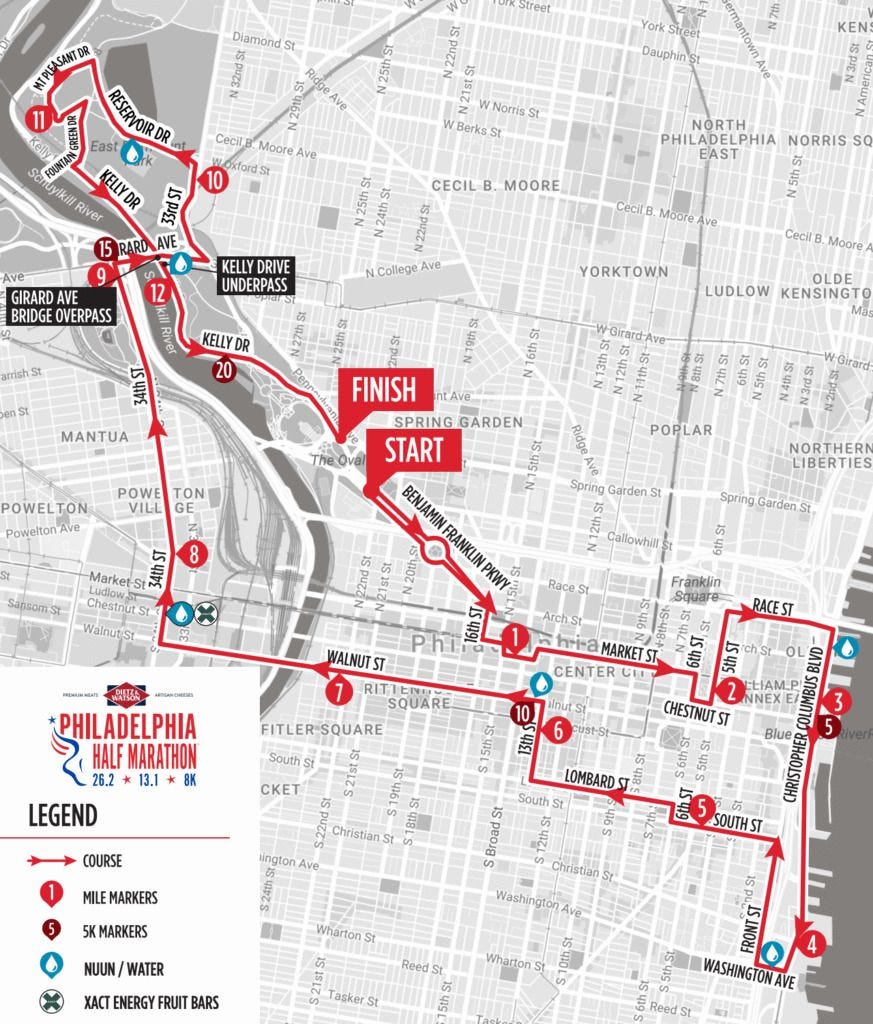
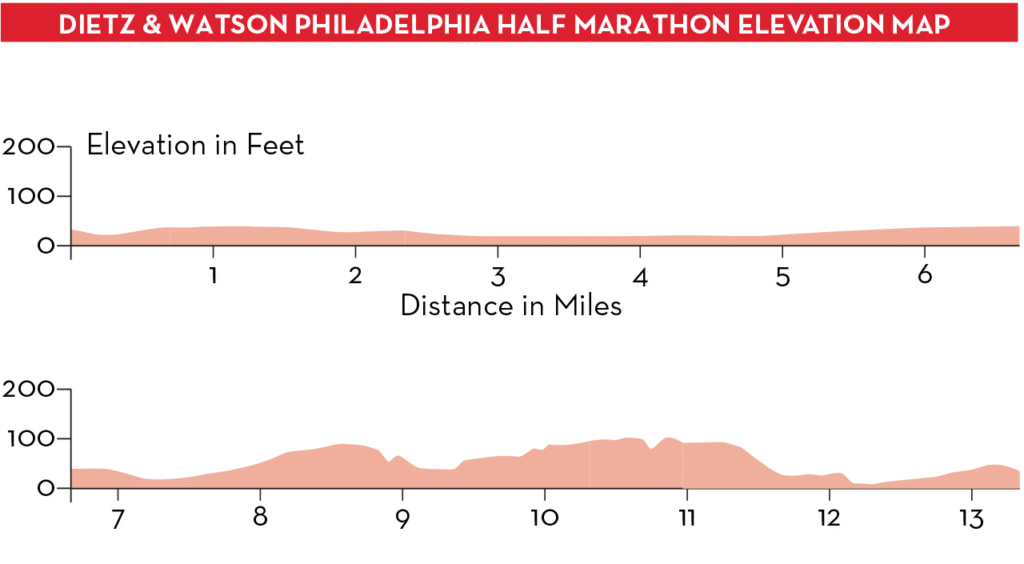
In summary, the race can be broken up like this:
Miles 1-7.25 - Fast and flat with no notable ascents.
Miles 7.25-10.5 - The tough part of the race with three significant climbs.
Miles 10.5-13.1: Fast and flat with one final hill towards the very end.
RACE RECAP
PRE-RACE
I had a plan for how the hour leading into the race would go, but that instantly went out the window with the horrid logistics of getting around thousands of runners in a confined, secure zone. It was a rainy morning pre-race and the secure zone had a lot of grass areas, meaning it didn’t take long for my shoes to get muddy and soaked. Regardless, I managed to get in a decent warmup, after which I went to gear check and spent the next 15 or so minutes standing around waiting to get to the front to hand off my stuff. Luckily, I brought a spare set of socks, so I was able to swap into those as I changed into my racing shoes. After handing off my bag, I found a stretch for short strides to prime the body and got to the line of Corral A feeling ready to go. Shortly before the start, I stripped down to my race fit and threw the spare layers off the course; I’d highly recommend you do the same to stay as warm as possible for as long as you can!
THE RACE
Final time: 1:12:01 | Place: 10th Overall (Non-Professional Field) | Conditions: An overcast, 46 degrees Fahrenheit morning with minimal wind and wet roads.
Five minutes after the start of the pro field, the gun went off for the rest of us mere mortals. Myself and a handful of others soon found ourselves working together at roughly 5:25-30/mile pace, enjoying the crowd support as we ran around City Hall and the historic district. About two miles in, it became clear that we had a good pack going, and from that point onward I just focused on settling in and conserving as much energy as I could for when things would get hard in the back half. Around 2.5 miles, my left shoelace came undone which was REALLY cool. I debated stopping but realized it wouldn’t be worth it as I’d end up in no man’s land with a lot of catching up to do. It messed with my stride ever so slightly as I had to run a certain way for the shoe to not fall off, but somehow it didn’t hinder me too much and I was able to stick with the pack. For the next 5 miles through 7.25, I did my best to forget about the shoe and conserve as much energy as possible, continuing to run at around 5:30/mile. Then, the hills began. The first one was arguably the worst, and I could tell as we worked up 34th Street that people around me were hurting. Luckily, I was feeling pretty good, so after peaking the hill, I worked down the pace as we descended towards the zoo, using that downhill to recover. After crossing the bridge on Girard Avenue, making our way left towards Fairmount Park, and getting past mile 10, the pack had dissolved to three. We worked through the park together, and I took the descents hard as we made our way onto Kelly Drive, at which point it was just myself and one other guy. The last mile and a half hurt, but it felt good to finally be running on flat ground for a while. We cranked down the pace to closer to 5:15/mile, and I was able to finish strong coming up the final hill, coming out on top of my pack with a time of 1:12:01 for 10th place overall (in the non-professional field).
POST-RACE
After the race, I wandered around aimlessly trying to find my darn family and girlfriend who had all come out to support me. My recommendation to you all would be to coordinate a post-race meetup spot beforehand; who would’ve thought?! After meeting up and chatting, I went home and dealt with a bad stomach the rest of the day which was my bodies lovely way of congratulating me for a good race! Running sure is humbling at times.
MY RACE HIGHLIGHTS
This race did NOT disappoint. I had a blast out there and it was arguably the most fun I’ve ever had on the roads. Here were some of the highlights for me:
The electric atmosphere around miles 6-7 where myself and another guy were amping up the large crowd lining both sides of the road.
Running through the open roads of Philadelphia.
Working with a good pack of guys for a lot of the race and coming out on top of that group.
Great racing weather.
My family and girlfriend cheering me on. <3
PROS AND CONS
Let’s break down the pros and cons of racing the Philadelphia Half Marathon.
PROS
Fairly good crowd support.
A cool city to run in.
Historically solid racing conditions (although it can get windy which is where drafting becomes important).
Plenty of competition for runners of all ability levels.
CONS
Not a super fast course given the hills of the back half.
Logistics aren’t great pre-race. Security can get long, there’s a ton of people, and the gear check line gets abysmally long.
Good luck getting in the “perfect” pre-race warmup given the sheer number of people jammed into a confined, secure zone.
MY RECOMMENDATIONS
If you want to have a good race day, consider these recommendations:
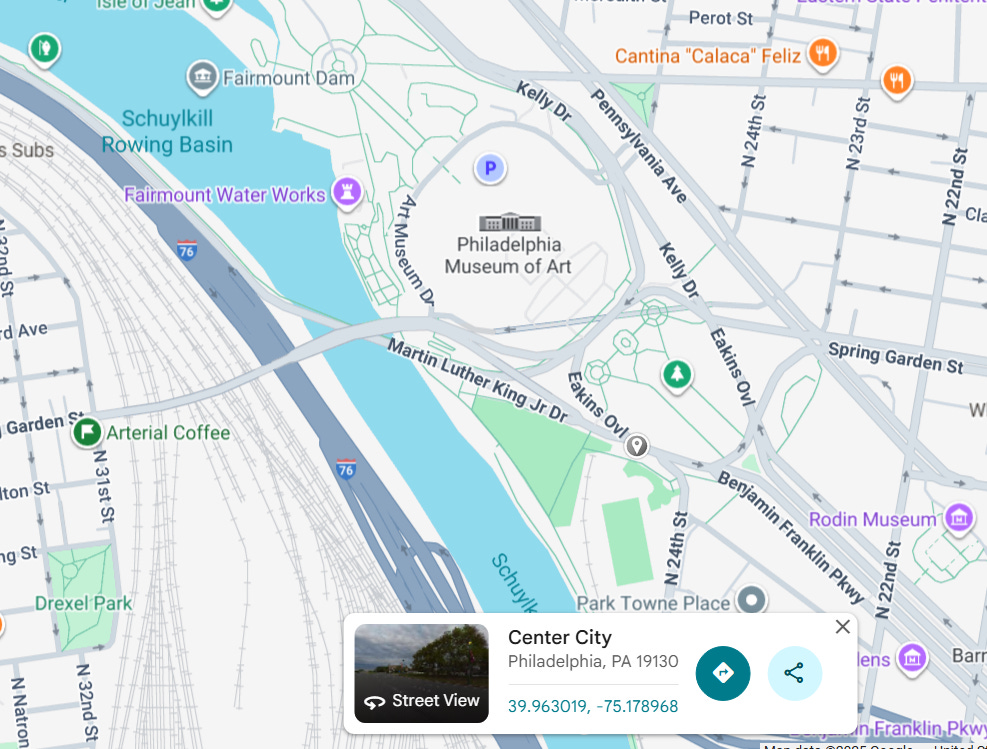
If you’re driving into the city on race morning, consider parking west of the race area in the vicinity of Drexel Park and Arterial Coffee. It fills up quick, but I’ve managed to find spots year after year (of spectating). Getting to the start is easy from there; just head east and walk over the bridge on Spring Garden Street.
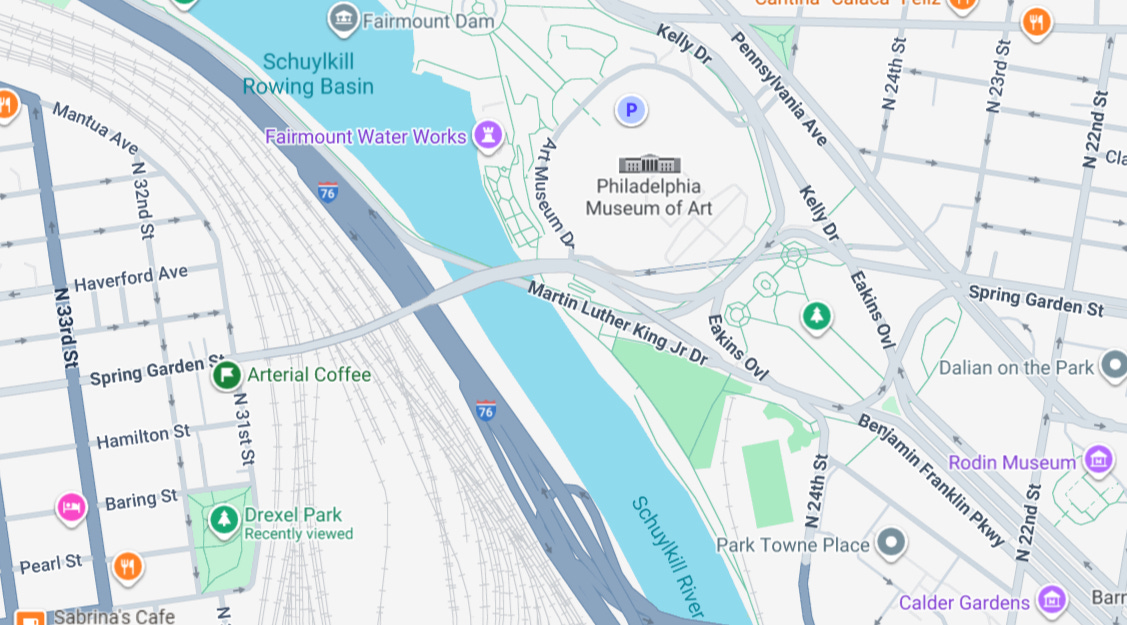
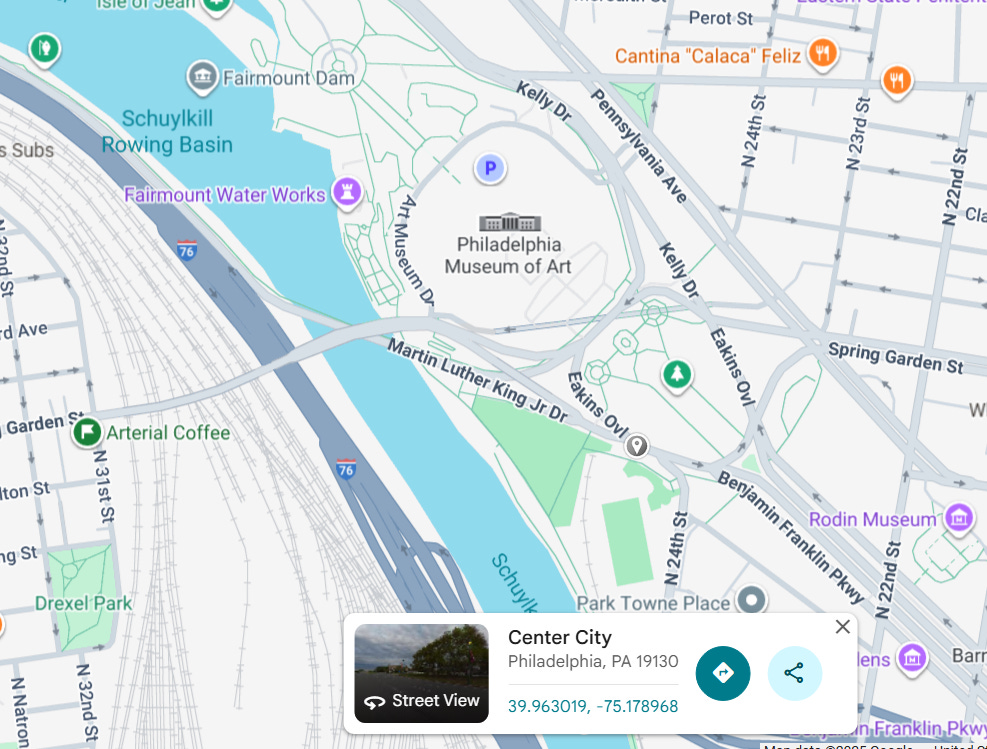
Enter security from the northwest end as pinned below (roughly where Eakins Oval and MLK Jr Drive meet). I entered around 6 AM, an hour before the race start, with no line. I’ve heard that other secured entrances get really long, especially the one from the southern end on the Benjamin Franklin Parkway.
Wear warm layers that you’re okay with never seeing again; I got mine at a Salvation Army. Keep them on as long as you can to stay warm, then toss them before the race begins.
Avoid gear check if you can. Frankly, it sucks. There are points along the secure zone’s perimeter where you should be able to hand off anything you don’t want for the race (assuming you have someone for such). If you have to do gear check, get there as soon as you can. If there’s a line, use that waiting time to do some dynamic stretching.
The only reason I did gear check was because I wanted to warm up in my training shoes instead of my race shoes. In retrospect, I could’ve coordinated a spot to hand those shoes off to save me the hassle of dealing with gear check.
Don’t expect to get in your ideal pre-race warmup routine given the tricky logistics of race day. Go in with a loose, flexible plan. No room for strides? Do some jumping as a neuromuscular primer.
Turn the brain off for as long as you can in that first half of the race and run a strong but controlled pace. If you can, find a pack to run with, and drafting will be your friend as there’s often some wind on race day. The second half isn’t easy given the significant ascents, which your legs will feel, but use the downhills for reprieve. If you’ve run the race correctly, you will have enough in the legs to finish strong on the relatively flat remaining ~1.5 miles on Kelly Drive. If you execute well on this strategy, you have a great chance of a solid performance.
KEY CONTRIBUTORS TO MY SUCCESS
Before giving my final thoughts, here are some key factors that allowed me to run a personal best in the half marathon on the day:
Many 18 mile long runs, some of which included half marathon-specific work to prepare me for the specific demands of race day.
Fueling the long runs with sufficient carbohydrate intake and hydration. Specifically, in my longer runs of 16 or more miles, I’d take 60 or more grams of carbohydrates per hour, the number itself depending on the intensity of the long run. The harder the long run, the more your body will tap into your glycogen stores for energy to your working muscles, meaning there’s a higher demand for carbohydrates. Thus, I would often take closer to 80-90 grams of carbohydrates per hour on the long run workout days. Additionally, I also carried two Nathan Pinnacle Soft Flasks, each of which was topped off with LMNT-filled water to ensure I was consuming enough water and electrolytes throughout the run.1 The combination of these two things made a noticeable difference in my ability to recover from long runs.
Plenty of protein and carbohydrates outside of my runs to optimize recovery. I’d often have a mid-day bowl of Greek yogurt, peanut butter, fruit, and a little honey, plus a protein-based dessert in the evening after dinner. Personally, I find it helpful to prioritize protein intake, but everyone is different with unique demands. For extra protein and to accelerate the muscular adaptation process, I’d often have a protein shake within 20-30 minutes of completing my strength training sessions.
If you love dessert, I’d HIGHLY recommend investing in a Ninja Creami. It’s an absolute game changer for my girlfriend and I. I like making mine with a combination of Greek yogurt, whole milk, peanut butter powder, protein powder, cocoa powder, salt, vanilla extract, and two or so tablespoons of maple syrup. Then, I add Oreos as a mix-in after the initial spin. 10/10.
A healthy and diverse diet with predominantly homemade meals. Mind you, I’d be lying if I said my girlfriend and I don’t absolutely OBLITERATE takeout once a week; it’s a special treat that I always look forward to and refuse to sacrifice. Nothing hits quite as hard as sesame chicken with rice and broccoli after a workout and lift day!!
Keeping training fun by doing workouts that I enjoy. Of course, sometimes you’ve got to bite the bullet and do those dreaded workouts, but overall you should enjoy your training. Enjoyment is key to long-term success!
Lifting in a running-specific manner twice a week, week after week, but dropping the frequency and intensity in the final weeks to freshen up the legs and get that full bounce in the stride. Strength training is severely underrated. It’s time to spam single-leg exercises, guys! Step-ups, touchdown squats, single-leg squats, and single-leg RDL’s will be your friends.
Getting adequate sleep to sufficiently recover from the training. Mind you, it could’ve been better, but having recently adopted a puppy after moving in with my girlfriend, a consistent eight hours of sleep (my ideal number) went out the window REAL quick. A consistent 7-7.5 hours per night was enough for me, though.
MY FINAL THOUGHTS
I’m very happy with my performance; it was a solid day and I’m proud of how I executed my race strategy and handled the unanticipated shoelace incident (which is also entirely my fault). Most importantly, it was awesome to roll up to the starting line both healthy and fit having had no training-halting injuries the entire training block. I could really feel the momentum building in the last five or so weeks leading into the race, and I’m excited to continue with this momentum after I take a week completely off from running. It’s wild to think that just a year prior, I was sidelined by a hairline stress fracture in the fifth metatarsal of my right foot, hobbling around in a boot with crutches to cheer on an athlete I coach who was running the full marathon. I’ve come a long way from that day!
Looking forward, I’m currently leaning towards racing the 2026 Jersey City Marathon in mid-April, with either the Garden State 10 Miler or Philadelphia Love Run Half Marathon as my final tune-up. Alternatively, I might do a speed block focusing on the 5k down to the mile, but my gut says to give it a send in a Spring marathon… The benefit of the half marathon training I just did is that it’s conducive to going either direction. Most likely, you’ll see me gunning for a sub-2:30 marathon this coming Spring. Yay! :)
If you have further questions about my training, the race course profile, or anything else whatsoever, please ask me of course! See my contact information at the bottom of this post; I would love to help.
LINKS/RESOURCES
Spring - The Garden State 10 Miler
Spring - The Jersey City Marathon
Nutrition + hydration
My go-to gels: Science in Sport Beta Fuel and Precision Fuel and Hydration
SUPPORT ME
Follow me on my other media through this link.
If you want personalized coaching and/or training advice, I’d be happy to help. You can email me at jacobreesmontgomery@gmail.com or send me a direct message on Instagram.
I’m a heavy and fairly salty sweater so the LMNT water is crucial for me, ESPECIALLY on warmer days.